AI product photography vs a photoshoot: what it costs and when to choose which
What a photoshoot costs, what AI costs, and when to choose which, with Belgian reference prices and a clear comparison.
By The Vela Team
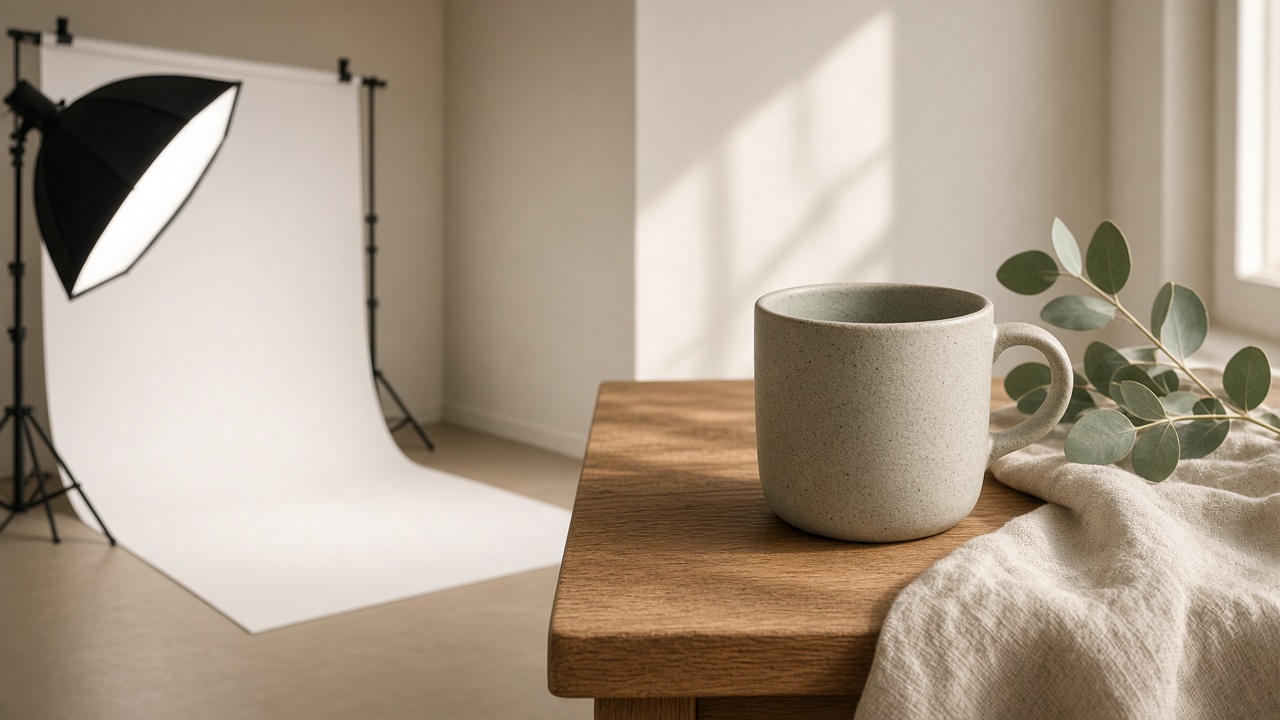
Short answer: AI product photography is cheaper and faster as soon as you need more than one packshot per product: lifestyle images, seasonal variations, ad variants and formats for every channel. A traditional photoshoot is still the best choice for hero campaigns, new products without a usable photo and materials where every detail matters. Most brands get the best results by combining the two: shoot once, properly, then multiply with AI.
In this article we compare both approaches with Belgian reference prices, a comparison table and a simple decision guide.
What is AI product photography?
AI product photography means creating product images with generative AI, starting from an existing photo of your real product. The model places that product in new environments (a kitchen table, a bathroom, a shop shelf), adjusts light and mood, and delivers the image in the formats your channels need.
The key point: with a good workflow the product itself is not invented. Your packshot or phone photo is the source. What is generated is everything around the product. That is why at Vela we talk about a studio built around your brand rather than a tool you type prompts into. How to keep that consistent across hundreds of images is covered in Brand consistency at generative scale.
What does a traditional product photoshoot cost in Belgium?
For simple packshots on a white background, Belgian prices currently look roughly like this:
- An average of 18 euros per photo for 1 to 15 photos, falling to an average of 10 euros per photo above 250 photos, plus a set-up fee of 25 to 50 euros (OfferteAdviseur price overview 2026, in Dutch).
- A mobile packshot photographer charges 9 euros per product for 1 to 10 products, down to 6 euros above 100 products, with a 75-euro set-up fee (Bronso Fotografie).
- Creative lifestyle shots cost 30 euros per photo as standard at another studio, with a 60-euro set-up fee (K-Style Fotografie).
That looks affordable, and for a packshot on white it is. But that is rarely where the budget goes. The real cost is in everything that comes after: lifestyle images, styling, locations, models, new seasonal campaigns and the dozens of formats that social, your web shop and ads require. Every new campaign means another shoot day, another schedule and weeks of lead time.
What does AI product photography cost?
With AI product photography, the cost moves from fixed shoot days to a price per image or a subscription. As an illustration, here are Vela's prices (excl. VAT, see our pricing):
| Vela Studio | Vela Studio, built around you | |
|---|---|---|
| Build (one-off) | €750 | €2,500 |
| Per month | €195 | €360 |
| Included per month | 40 images and 5 videos | 100 images and 15 videos |
| Extra images | €0.25 per image | €0.20 per image |
| Extra videos | €7 per video | €6 per video |
The difference is mainly in what each additional image costs. With a shoot, a new mood or a new season means rescheduling and paying again. With AI, an extra variant is a small additional cost, and it is ready within the hour.
AI product photography vs a photoshoot: the comparison
| Criterion | Traditional photoshoot | AI product photography |
|---|---|---|
| Cost structure | Fixed day costs + price per photo | Subscription or price per image |
| Turnaround | Days to weeks (planning, shoot, post-production) | Hours to a few days |
| Input needed | The physical product, a studio, possibly styling and models | One good photo of the product |
| Variations and seasons | Every variant is extra shoot time | A variant is a new brief |
| Formats (1:1, 4:5, 9:16, 16:9…) | Often a crop of the same image | Recomposed per format |
| Strong at | Hero images, storytelling, colour- and texture-critical work | Volume, lifestyle context, ad variants |
| Risk | Budget and scheduling | Inaccurate details if the source or review is weak |
When should you choose a traditional photoshoot?
A real shoot remains the best choice when:
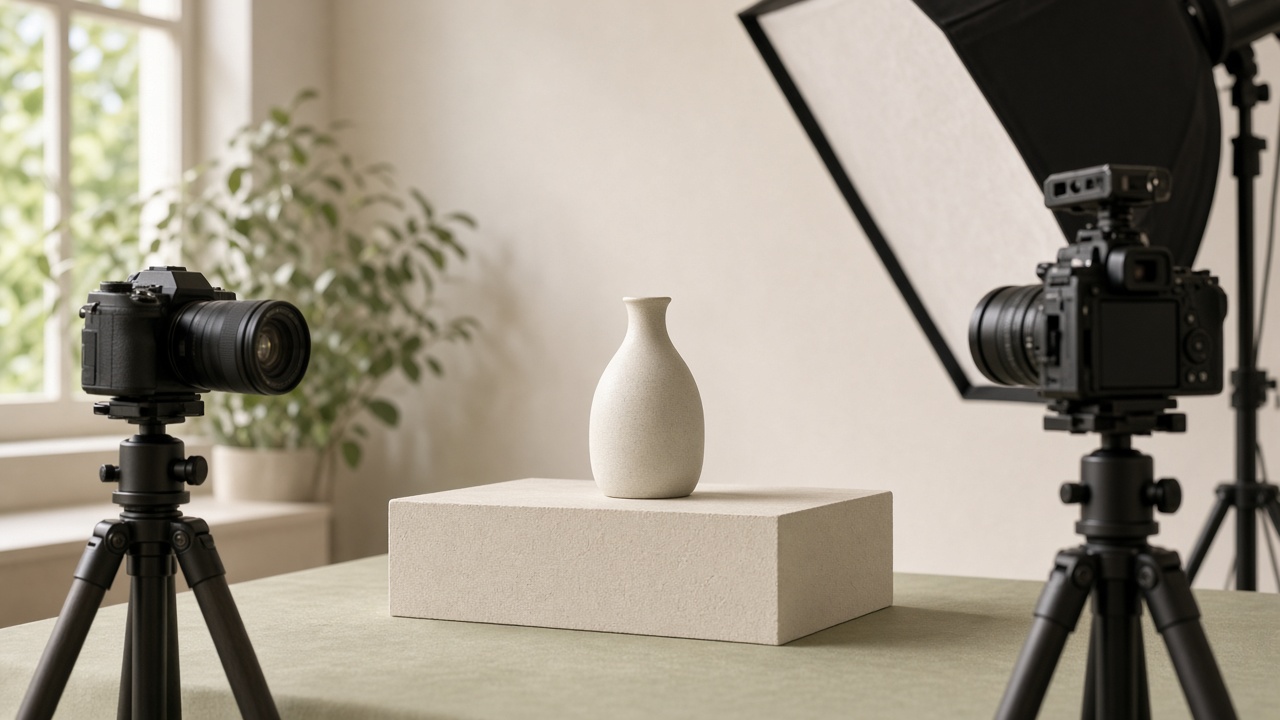
- You are making a hero campaign with a story, real people and a creative concept that carries the brand for a year.
- Your product has no usable photo yet. A new product without a packshot needs to be photographed properly at least once.
- Colour and texture are critical. Think of textiles, where a colour mismatch leads to returns, or jewellery with fine detail.
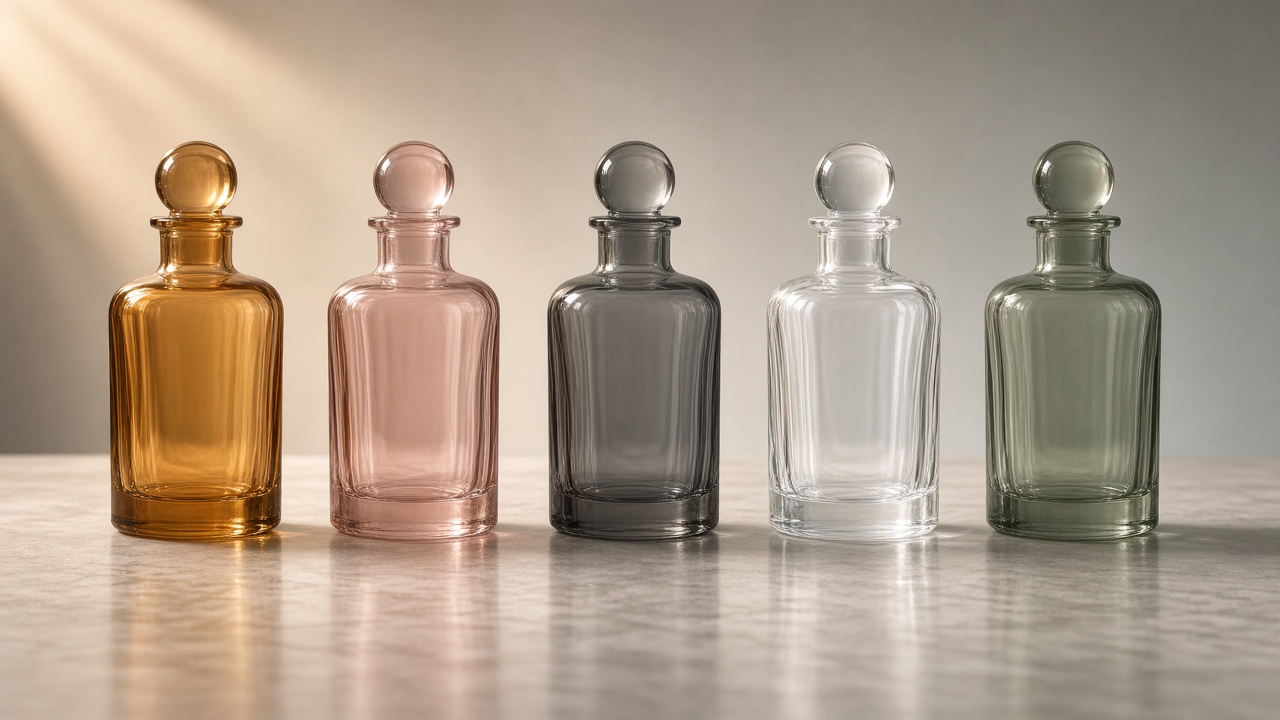
- Your product is highly reflective or transparent, such as glass, chrome or perfume bottles. Here too, a good source photo is essential.
When should you choose AI product photography?
AI is the logical choice when:
- You have more products than photos. Your whole catalogue deserves lifestyle images, not just your five best-sellers.
- Your feed has gone quiet because there is not enough new imagery to post every week.
- Your ads need variants. Five angles per product (benefit, before and after, problem, review, comparison) cannot be tested with a single shoot day.
- You want to serve every channel in the right format, from a 9:16 Reel to a 4:1 billboard. Which format works when is covered in Static vs video: what to generate when.
- Speed matters, for example for a seasonal promotion that needs to go live next week.
The combination that works best: shoot once, then multiply
Most brands do not have to choose one or the other. The strongest approach looks like this:
- Photograph your product once, properly, or use the packshots you already have.
- Let AI do the multiplying: settings, seasons, lifestyle context and every format.
- Check every image against the real product: label, colour, proportions.
- Save your shoot budget for the moments where a camera really makes the difference.
That shifts your budget from repeating to creating. How teams cut their content cycle from weeks to hours this way is covered in Catching the wind: shipping content faster with AI.
What to watch out for with AI product photos
- Labels and small print. General tools do not know your product and guess at your label. A studio built from your own files keeps labels legible.
- Honest representation. Show the product as it is. An image that makes your product look better than reality leads to returns and can fall under the EU AI Act's labelling obligation (Article 50, AI Act).
- Rights and exclusivity. Check whether your studio or model is used exclusively for your brand and whether the licence covers every channel.
- Human review. Every image should be checked before it goes live. That is not a detail; it is the method.
See it with your own products
Not sure whether AI product photography works for your range? Send us one product line and your brand guidelines. Within a week you will see the result next to the price you would normally pay. No shoot needed, cancel monthly.
Frequently asked questions
What is AI product photography?
+
AI product photography means creating product images with generative AI, starting from an existing photo of your real product. The model places that product in new settings, moods and formats without a new photoshoot. The product itself stays the source; the surroundings are generated.
How much does a product photographer cost in Belgium?
+
For packshots on white, Belgian photographers charge roughly 6 to 18 euros per photo depending on volume, plus a set-up fee of around 25 to 75 euros. Creative lifestyle shots cost more, for example around 30 euros per photo. For campaign work, shoot days, styling, models and locations come on top.
Is AI product photography cheaper than a photoshoot?
+
Per additional image, almost always, because AI scales per image while a shoot has fixed day costs. For a single simple packshot on white the difference is small. The advantage grows with lifestyle images, seasonal variations, ad variants and many formats per product.
Can AI fully replace a real photoshoot?
+
Not always. For hero campaigns with a story, new products without a usable photo, colour-critical fabrics or highly reflective and transparent materials, a real shoot is still the safest choice. For variations, lifestyle context and formats, AI is usually faster and cheaper.
What photo do I need to start with AI product photography?
+
One sharp, well-lit photo of the real product is often enough: a packshot, a phone photo or the image on your product page. The better the source, the more accurately labels, colours and details are kept.
Do I need to label AI product images?
+
It depends on what you show. Since 2 August 2026, Article 50 of the EU AI Act requires you to disclose realistic AI images that could pass as real. According to the European Commission, an image that makes the product look better than it is falls under this; ordinary retouching or a different background usually does not.
Ready to ship content that catches the wind?
Book a live intro and see the studio in action.